

What aspects should be paid attention to in the maintenance of pneumatic press molds?
Release time:
2021-05-26
In modern industrial production, many mechanical equipment require regular and meticulous maintenance to ensure their production performance. It's undeniable that in today's industrial society, mechanical production equipment is not only becoming automated but also gradually diversifying. Take pneumatic presses as an example; even with the same set of press equipment, multiple sets of press dies may be needed for stamping production.
For ordinary pneumatic press dies, regular maintenance is required to ensure their work efficiency and service life. So, what aspects should be paid attention to in the maintenance of pneumatic press dies?
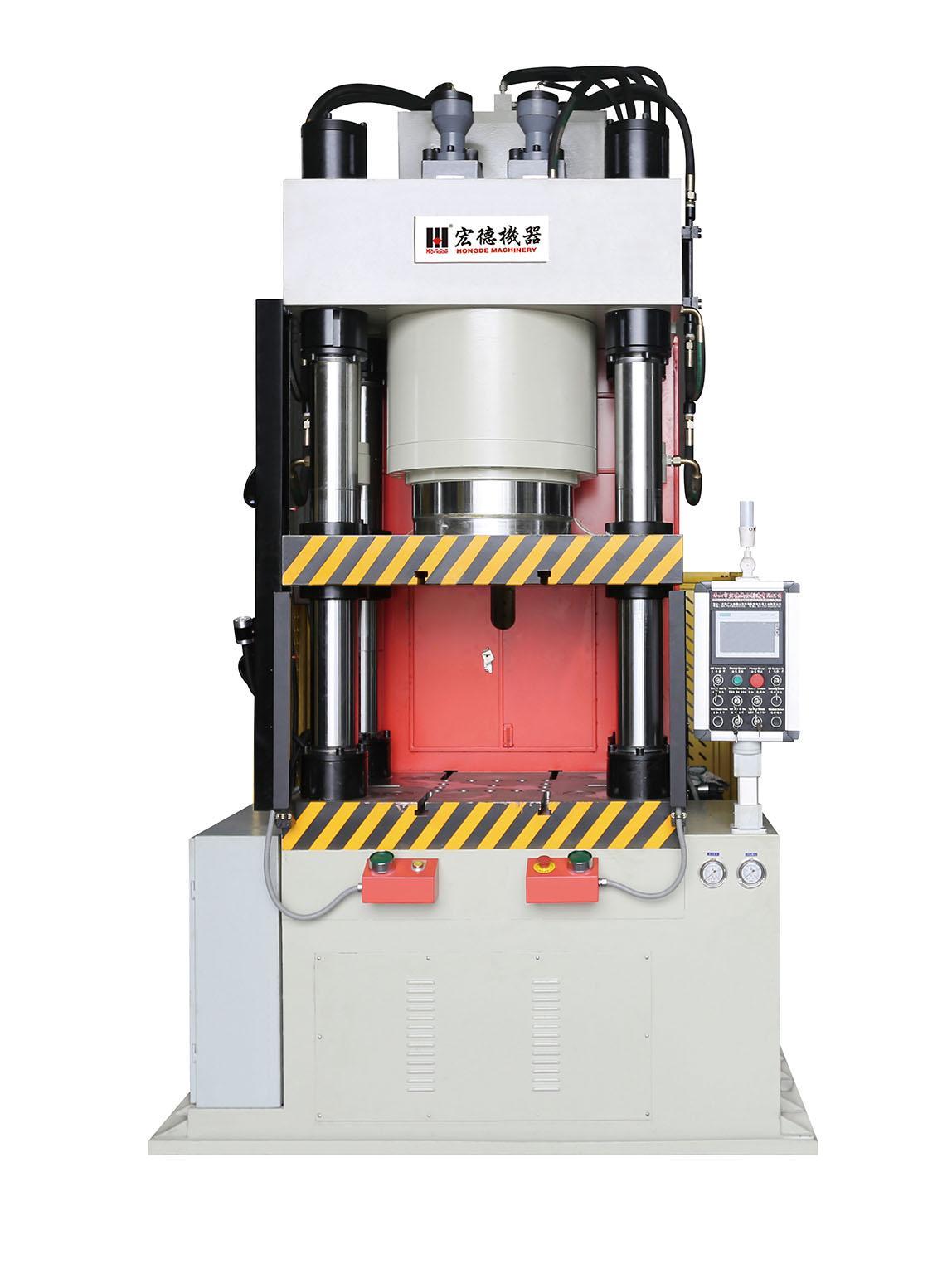
1. To ensure a smooth worktable, the pneumatic press die should be regularly cleaned and lubricated.
2. Different lower die clearances should be selected according to the thickness of different press bed plate materials. If the clearance is too small, it is easy to damage the die; if the clearance is too large, there will be large burrs.
3. Different materials should use different materials. For example, stainless steel and aluminum copper plates should use special steel.
4. Regularly check the coaxiality of the upper and lower die seats of the press punch and keep the axis parallel. If the die position is incorrect, it is easy to cause one-sided friction or breakage of the die.
5. The press punch for placing the die should be adjusted from a lower position to an appropriate position; otherwise, it is easy to cause external force damage and breakage of the die.
6. When the wear of the upper and lower die edges is found to be an r0.25mm radius, they need to be resharpened. After grinding, the edges should be treated with an oilstone to remove excessively sharp edges, demagnetize, and remove oil stains. When the die is insufficient, adjust the height of the impact head to the required size.
7. Each grinding amount (tool feed rate) should not exceed 0.013mm. Excessive grinding amount will cause the die surface to overheat, which is equivalent to annealing and softening the die, greatly reducing its service life. Sufficient coolant will be added during grinding. The grinding amount of pneumatic dies is fixed.
8. When replacing dies and cutting edges, pay attention to safety before and after equipment startup to prevent equipment, die, and personal injury.
Pneumatic dies are part of the stamping process, and the accuracy of the die largely determines the processing accuracy of the workpiece. Therefore, maintaining the dies of pneumatic presses is very important!
Recommended products
2023-05-12
What are the characteristics of a hydraulic press?
CNC hydraulic oil pumps generally use internal gear pumps, while traditional hydraulic presses generally use axial piston pumps. At the same flow rate and pressure, the noise of an internal gear pump is 5 dB to 10 dB lower than that of an axial piston pump. The motor of a CNC hydraulic press runs at rated speed during pressing and return, and its noise emission is 5 dB to 10 dB lower than that of a traditional hydraulic press. When the slider rapidly descends and is stationary, the servo motor speed is 0, so the CNC hydraulic press has essentially no noise emission.
2015-08-25
Application scope and system selection of small hydraulic presses
Suitable applications for small hydraulic presses include: 1. Punching various silicone and plastic buttons for mobile phones or remote controls, and cutting plastic products; 2. Cutting various protective films for mobile phones, digital cameras, and laptop LCD screens, as well as precision cutting and halving of various pressure-sensitive adhesives and trademarks; 3. Embossing, forming, etc., of various PV, PE, PC and other thin-film switches and panels; 4. Pressing and forming various flexible circuit lines for laptop keyboards, etc. Small hydraulic presses use original Taiwanese or Japanese parts for the hydraulic power system, resulting in fewer malfunctions, high efficiency, low noise, low horsepower requirements, easy maintenance, and convenient adjustment of output, speed, and stroke.
2014-04-29
Technology Daily (Reporter Shi Junbin, Correspondent Jiao Yue) Recently, a 19,500-ton free forging hydraulic press and a 300-ton/750-ton-meter full hydraulic forging manipulator, independently developed by China Heavy Industry Corporation, successfully completed their first hot load test run in Jiangyin, Jiangsu Province. This marks the completion of the world's largest tonnage free forging hydraulic press and the world's largest clamping force/clamping torque full hydraulic forging manipulator currently in operation, achieving a globally advanced level of overall equipment installation. The 19,500-ton free forging hydraulic press adopts a three-beam, four-column, three-cylinder, top-drive, press-insert, full pre-stressed frame structure. Both the upper and lower beams use pre-stressed composite beams. The maximum forging capacity can reach 4
Contact us
Address: No. 19, Science and Technology East Road, Songxia Industrial Park, Songgang, Nanhai District, Foshan City, Guangdong Province, China
Tel: 0086-0757-85203155
Mobile: 18033239126(Mr. Yang)
Fax: 0086-0757-85203166
Email: info@fs-hongdemachinery.com
Scan to follow
Xin Hongde Mobile Website
Quick Navigation
©2025 Foshan Xin Hongde Machinery Manufacturing Co., Ltd. All rights reserved